Energy intensive industries and decreasing CO2 emissions – how is that possible? PDF Print E-mail
Written by Administrator   
Monday, 15 December 2008 20:51
The opening of energy sources based on waste and biomass (waste products) are the key.
To let biological waste decay unexploited or to let water evaporate doesn’t make sense! This is still happening at disposal sites and in waste incineration plants.

If e.g. biomass is transformed into substrates with a high energy density by conversion technologies (without having the logistics devour too much carbon dioixide), the plants which deliver electricity, heat, and possibly cooling have to be placed in close vicinity to the energy consuming industries.
 
  • Needless to say, in this case the efficiency of such plants is increased.
  • Needless to say, this is a sustainable use of waste.
  • Needless to say, this is eminently climate friendly.
  • Needless to say, this is a solution which makes good economic sense for the companies.
 
Are there technologies like that?
Last Updated on Tuesday, 16 December 2008 08:33
Read more...
 
Are wind turbines and solar plants the only potential future source of energy for domestic, commercial and industrial operations? PDF Print E-mail
Written by Bruehl-Saager   
Saturday, 15 November 2008 12:18

We at the ENTEX GROUP disagree! In ad the vogue mix of energy sources from renewable energy sources, biomass, and fossil energy sources we provide intelligent SOLUTIONS to reduce and optimize energy generation in a cost-effective fashion! 

How is this possible?

ENTEX Group has established some basic groundbreaking principles, which ENTEX enable us to provide solutions for the commercial, industrial and domestic markets. An important principle is:

Energy must me generated where in close proximity to where it is required: This approach is not new; however, ENTEX provides solutions using state-of-the-art technologies using waste and biomass generated from commercial and industrial operations for use at the site or in close proximity to said operations.

This has several advantages:

  • The user gains independence from the often-unstable market trends by using fossil fuels.

  • The use of fossil fuels is reduced thus reducing its carbon footprint.

  • The dependence on fossil fuel is minimized.

  • The efficiency of plant operations increases and becomes significantly greater.

  • Investments for expanding power grids are minimized which is significant for operations in outlying and remote territorial areas.

  • The release of methane gas from landfills, which is often uncontrolled and non-engineered, is prevented.

In summary, what ENTEX is proposing and offering to the marketplace is an environmentally friendly, resources saving, and cost-effective approach!


How does ENTEX offer such an approach?

The best way to demonstrate our approach is by example!

It is common knowledge that industrial operations use energy to generate process steam, warm water, electrical energy, and cooling capabilities.  These include but are not limited to the paper industry, the plastic industry, most manufacturers (automotive, etc.), and the like. Other consumers are the domestic market (housing), office complexes, outdoor pools, arenas, etc.

In order to design an effective solution for energy requirements for a particular operation as presented above using innovative technologies involving the use of waste, biomass, and other potential synergetic technologies for a region whether it be in a cold or warm climate areas (or both due to seasonal change) it is necessary to research an operation (industrial or domestic) to develop a conceptual model. Once established, a decision is made to determine if the model is economically feasible and sustainable. If it is, a is made to move forward and develop the facility whether it be an industrial plant, an office complex or a residential development.  

ENTEX has the capabilities and a proven track record to apply innovative technologies which can generate process steam, hot water, warm water, electricity and cooling capabilities using waste and biomass resources.  

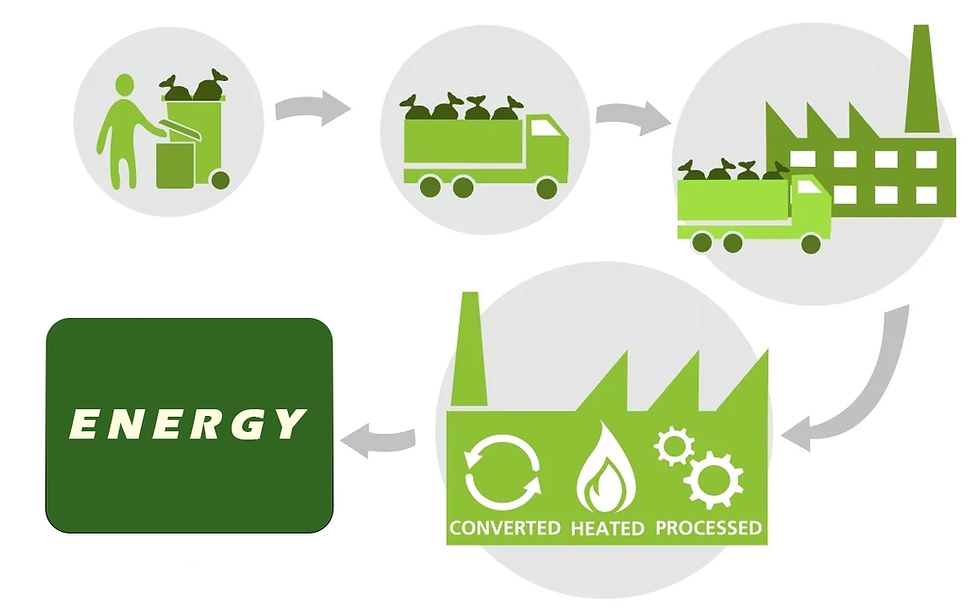
For example, ENTEX can design systems that can use conversion products from waste and biomass such as SNG, biogas, synthesis gas, and bio fuels to power energy efficient turbines to generate energy. These plants can be stand alone, combined with on-site conversion methods or operated by such conversion plants with adequate supply of fuel.  

In addition, if the energy consumer partners with ENTEX it does not need to waste time managing the operation and maintenance of these technologies allowing them more time to manage their core business.

Other important benefits to the consumer are the positive economics of the operations and environmentally friendly advantages within the different operating models.

The “Energy Consumer” becomes the “Energy Producer”:

Typically an energy user is synonymous with a waste generator regardless of industry type (the food, furniture, or plastics industry, manufacturers, etc.).

It has been ENTEX’s experience that it is usually possible to extract a fuel derivate by conversion of the facility’s waste and transform it to an energy generating source to partially or completely power its plant’s operations. 

In the event that the amount of waste and biomass generated at a facility is insufficient to power the entire operation, the demand would need to be satisfied from other sources. Another possibility is that the company uses its waste as an energy resource to supplement energy it purchases from other sources such as the grid as a method to save money which can be applied to its “bottom line”.

There are various ways to establish a partnership with ENTEX to produce energy from waste and biomass which would save money and establish and environmentally friendly image in the community and marketplace by demonstrating its contribution to protecting the climate.


Last Updated on Saturday, 22 November 2008 14:41